

Expert-Backed Technology Designed To Improve Real Human Connection

Most webcams are built around technical specifications. Resolution, frame rates, and sensor size dominate their product pages. Yet almost none of those specifications explain why a conversation feels clear, trustworthy, or genuinely human. As more written communication becomes generated or assisted by AI, the value of authentic face-to-face presence is rising. People now look for reliability, clarity, and trust in every interaction. A webcam should help deliver that trust, not distract from it.

iContact webcams focus on something fundamental: communication quality. Every model is designed to align your gaze naturally with the other person. Research repeatedly shows that eye-level communication improves comprehension, reduces cognitive load, increases perceived trustworthiness, and helps people stay more engaged. This makes communication smoother across Zoom, Microsoft Teams, Google Meet, streaming platforms, and teleprompter-style workflows.

This is especially important as large enterprises experiment with expensive lenticular video systems—such as Google’s Project Starline and Beam—that simulate life-sized 1:1 communication. These solutions promise stronger human presence but cost tens of thousands of dollars and require dedicated rooms. Most people will never use them. A well-designed webcam that restores natural eye contact is a practical solution that improves communication for every employee, student, or client without the infrastructure overhead.

iContact believes webcams must move beyond technical measurements and actually help people communicate more effectively.

Why iContact Webcams Improve Communication

High-quality communication depends on more than image sharpness. It depends on how naturally a person appears to speak with you. When someone’s gaze appears slightly downward—because laptop cameras sit below eye level—every message feels less direct. People sense this without realizing it. Their brains work harder to interpret expressions because the visual information does not match the social expectation of eye contact.

iContact webcams are designed to correct this specific issue. Each model places the lens at true eye level rather than somewhere below or off to the side. A small change in angle can significantly influence how clearly a message is received. Studies show that eye-level alignment increases the likelihood that listeners believe a speaker’s statements. Other research demonstrates higher engagement and better memory retention when people look as if they are speaking directly to one another. Users process gestures and facial cues more easily when gaze alignment feels natural.

Traditional webcams rarely solve this problem. Most are optimized around technical metrics—megapixels, light algorithms, or noise reduction. These elements matter, but they do not change the basic physics of gaze placement. When the camera sits below your natural line of sight, your eyes will always appear slightly averted. Even a 5-degree misalignment can make communication feel distant. In daily meetings, that small misalignment accumulates into fatigue. People feel less connected, less attentive, and less certain they fully understand the speaker’s intent.

This matters even more today, when many interactions happen through Zoom, Microsoft Teams, and Google Meet. Professionals rely on video calls for hiring, training, selling, teaching, and resolving complex issues with customers. When communication is the product—such as coaching, consulting, medicine, or education—the quality of that communication becomes essential. A webcam should support clarity and trust, not work against it.

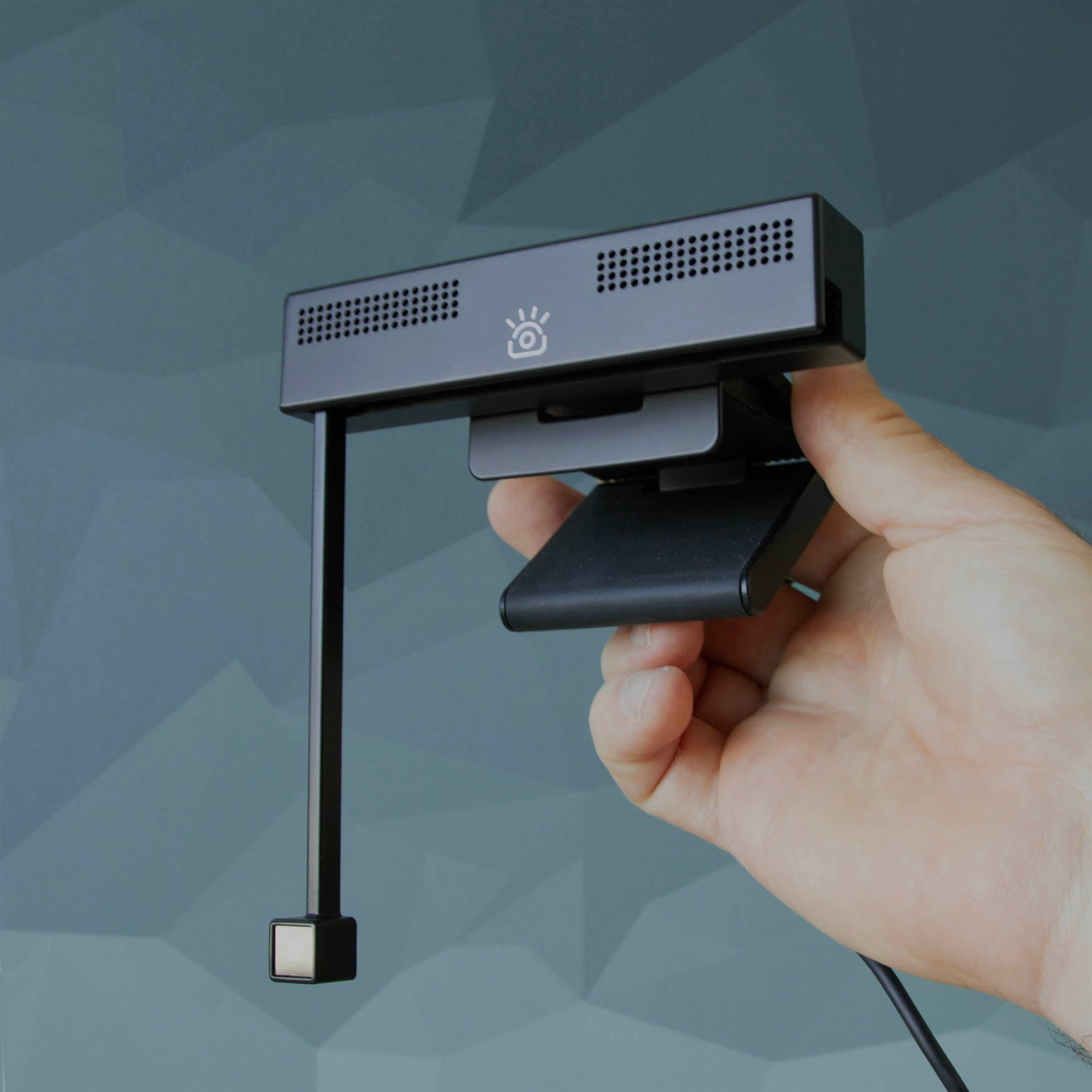
iContact webcams improve communication by elevating the lens to match the user’s gaze. Whether someone uses a laptop, external display, or teleprompter-style workflow, the camera positions itself at the right height to create a natural 1:1 interaction. This helps people maintain presence without forcing them to stare unnaturally into the corner of their screen. The goal is to let users focus on the message, not the mechanics of delivery.

Most users notice the difference immediately. Conversations feel more direct. People seem to pay closer attention. Meetings run more efficiently because participants can read expressions clearly. Discussions become smoother because less time is lost interpreting subtle cues. These improvements are not the result of complicated software or proprietary filters. They are the result of restoring a fundamental communication principle: place the eyes where the other person expects them to be.

This approach becomes even more relevant as AI-generated content becomes more common. Written communication now passes through layers of automation and assistance. People receiving a message want reassurance that the person on the other side is genuine. Eye-level video restores this reassurance. It reminds people that there is a real person speaking with real intentions. Trust, clarity, and credibility become essential differentiators as AI becomes more capable. A webcam that strengthens trust is more valuable than one that simply increases resolution.

For creators and streamers, eye alignment has a similar impact. When presenting or recording content, looking directly at the audience makes messages feel more engaging. Many streamers use teleprompters or beam-splitter setups to achieve eye-level alignment. iContact webcams are designed to support these workflows without the complexity or cost of specialized equipment. Whether used for tutorials, interviews, fundraising, or customer education, the camera helps maintain a natural connection between the presenter and the viewer.

Enterprises value this clarity at scale. A company equipping remote teams, sales departments, or customer-facing staff benefits from consistent communication quality across thousands of conversations. When people speak clearly and appear engaged, meetings become more efficient. Miscommunication decreases. Team alignment improves. People feel more present with their colleagues even when working remotely. This creates long-term cultural value, not just technical improvement.

The rise of high-cost immersive meeting systems highlights the importance of eye-level communication. Lenticular video systems create a three-dimensional sense of presence by aligning life-sized images and eye contact. They aim to replicate the experience of speaking face-to-face. This technology is impressive but inaccessible. Dedicated hardware, construction requirements, and room-by-room deployment limit adoption. Most organizations cannot justify such an investment for everyday communication. A high-quality webcam that improves eye contact provides many of the same communication benefits at a fraction of the cost.

iContact webcams offer a practical version of this improvement. They do not require special networks, controlled environments, or proprietary rooms. They work with Zoom, Microsoft Teams, Google Meet, and all major communication platforms. They offer a portable, cost-effective way to elevate communication quality across the entire organization.

The design philosophy is simple: help people be seen the way they intend. Clear alignment creates clarity of message. Instructive moments become easier. Negotiations become smoother. Teaching feels more natural. Customer conversations feel more personal. This matters across industries, from education and healthcare to legal, sales, consulting, and financial advisory roles.

As companies adopt AI tools, video communication is becoming the primary space where authenticity lives. People might draft text messages with AI, but they rely on live conversation to build trust. Video calls are where decisions happen. Clear eye contact reinforces confidence. A webcam that supports this is not just a piece of hardware. It becomes part of how the organization communicates.

This is why iContact offers multiple webcam models tailored to different workstyles and budgets. Some users work from laptops and need a simple clip-on solution that elevates the lens to eye level. Others use dual monitors and need a flexible mounting approach. Some require teleprompter-style alignment for recording or presenting. Each model maintains the same principle: help the user communicate more effectively through proper gaze alignment.

The result is a camera that feels familiar yet noticeably better. Instead of focusing on features that matter only in lab tests, the design supports people in real communication environments. This approach reduces fatigue, improves attention, and strengthens trust. Over time, it becomes part of how people work, teach, collaborate, and build relationships.

A webcam should not compete for attention. It should quietly do its job by helping people connect. That is the purpose of the iContact line.

FAQs

Why is iContact better for communication?

Most webcams sit below eye level, causing downward gaze. This creates cognitive strain for the viewer. iContact webcams align your eyes naturally with the other person, making conversations feel more direct and easier to follow.

Does eye contact really improve trust?

Research shows that people are more likely to believe a speaker’s message when the speaker maintains eye contact. Direct gaze improves perceived credibility, engagement, and clarity.

Do iContact webcams work with Zoom, Microsoft Teams, and Google Meet?

Yes. All iContact models are compatible with major platforms without additional software.

How does iContact compare to high-end immersive systems like Google Beam or Starline?

Those systems simulate eye-level presence using specialized optics and lenticular imaging but cost tens of thousands of dollars. iContact delivers improved eye contact at a cost accessible to everyone.

Are iContact webcams useful for streaming and teleprompter workflows?

Yes. The lens placement helps presenters maintain natural connection with audiences, making content feel more engaging.

Do iContact webcams require special setup?

No. They are plug-and-play and work with existing computers, monitors, and software.