


Select the correct microphone
For normal use, select iContact Camera as your microphone. When using Control's audio features, select iContact Control if it is offered.
Check this first — many audio complaints turn out to be a laptop's built-in microphone still being selected.
If you sound quiet or distant
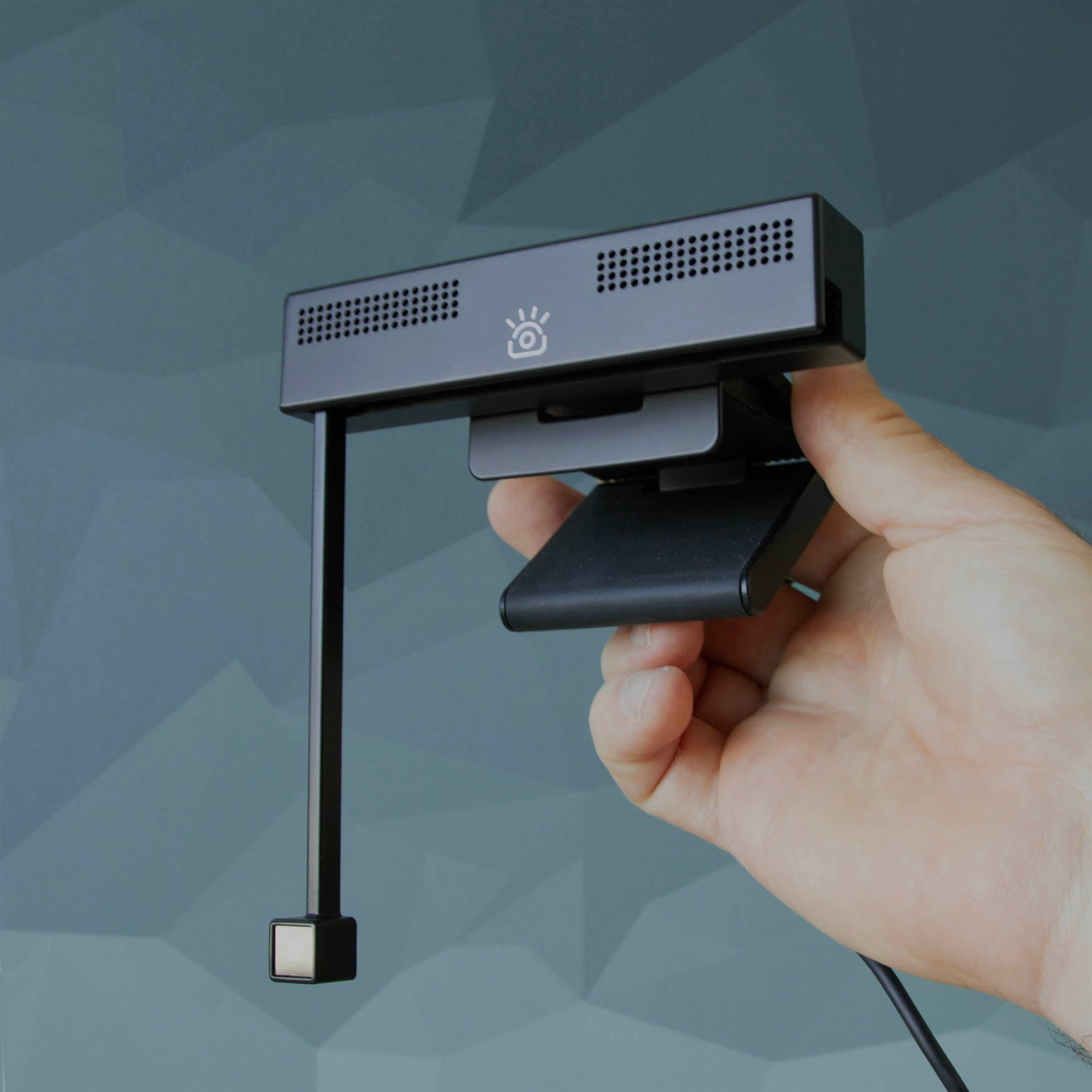
- Check the arm is fully down. The microphones are powered off with the arm up, so your computer will fall back to another microphone without telling you.
- Check nothing is in front of the camera — a monitor bezel, a sticky note, a laptop lid resting against it.
- Sit at a normal desk distance. The microphones are tuned for someone seated at their screen, not across the room. For larger rooms or several people, add the 360° tabletop mic.
- Raise the input level in iContact Control, and in your operating system's sound input settings.
Reduce background noise
A quieter room gives clearer voice pickup than any amount of processing. Keep loud fans, speakers and other noise sources away from the camera.
Use iContact Control
Open iContact Control to adjust volume, bass, treble, AI noise reduction and echo cancellation.
Check your meeting app too
Zoom, Teams and Meet all apply their own background-noise suppression. Two layers of processing can make voices sound thin or clipped — if your audio sounds odd rather than noisy, try turning one of them down.
If your audio cuts in and out
That is usually a connection problem rather than an audio one. Plug the camera directly into your computer rather than a hub or dock — see steadying a flickering picture, which covers the same cause.
Narrowing it down
Record a short clip in QuickTime or Windows Camera. If it sounds right there but wrong in a meeting, the meeting app is the cause.