

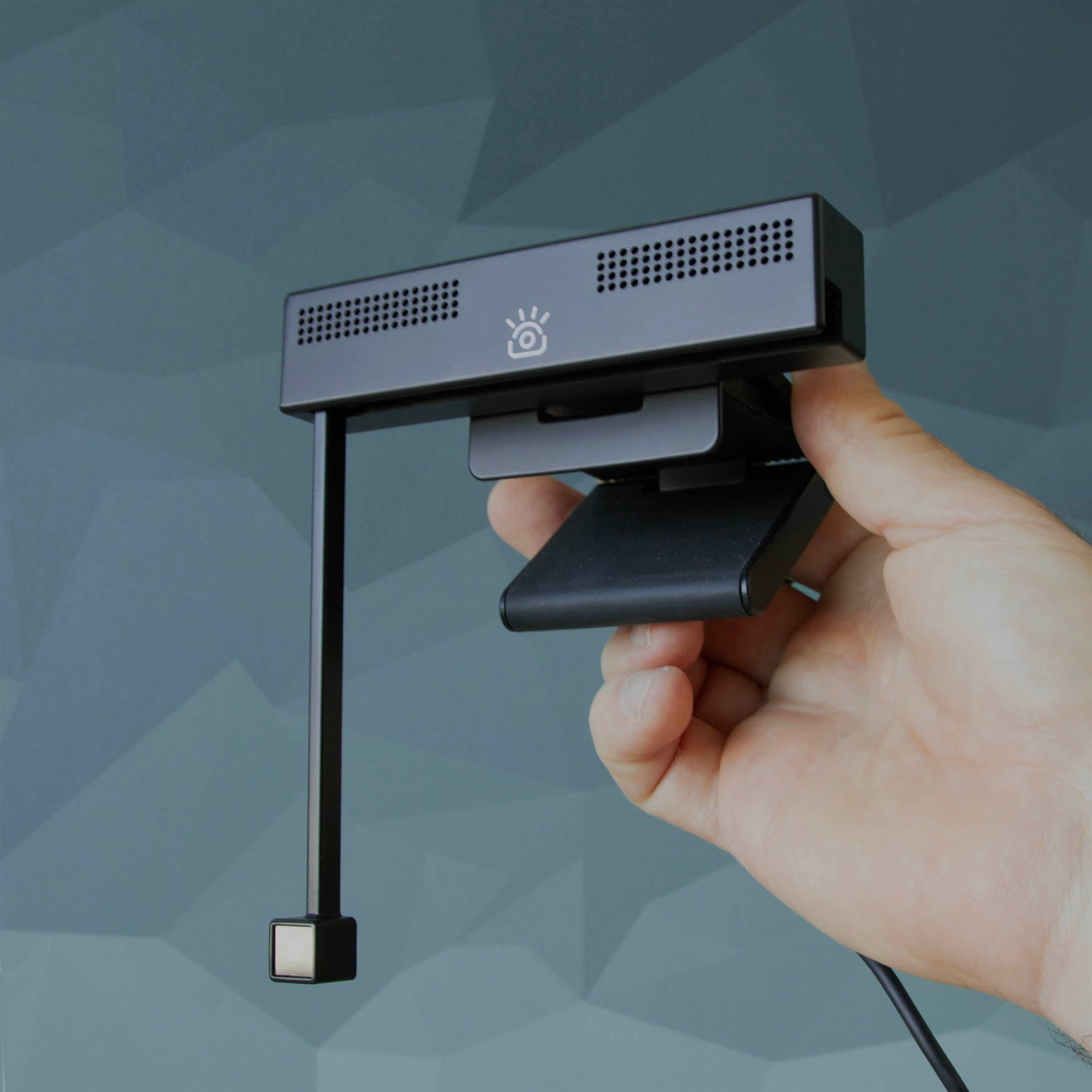
Flicker is almost always the USB connection, and most often a hub or dock. Freezing, stuttering and lag usually come from the same place. A 4K stream needs steady power and steady bandwidth, and anything sitting between the camera and your computer takes a share of both.
Start here — this fixes most cases
- Plug the camera directly into your computer. Not a USB hub, not a dock, not a monitor's USB port, not a keyboard passthrough, not an extension cable. Bypass the hub even if it has always worked — hubs fail intermittently as devices are added to them.
- Use a different port. On many laptops the ports are not equal; some supply more current than others. Try each one.
- Unplug other high-draw devices — external drives, second monitors, chargers. If it settles, the total load was the problem.
- Use the supplied cable. Long or thin third-party cables lose voltage over their length, and charge-only cables carry too little data for 4K video.
If you must use a dock or hub, use a powered one with its own mains adapter, and give the camera a port of its own. Most of the docks that cause this are bus-powered.
On a laptop, check power settings next
Windows puts USB devices to sleep to save battery, which shows up as a stutter or a dropped image mid-call. On battery, both Windows and macOS also throttle performance, and video encoding is among the first things to suffer — plug the mains adapter in before testing.
Turn off USB selective suspend
- Search for Power & sleep settings.
- Click Additional power settings.
- Choose High performance, then Change plan settings > Change advanced power settings.
- Open USB settings > USB selective suspend setting and set it to Disabled.
- Save, then restart.
If your laptop has an Nvidia graphics card, open the Nvidia Control Panel > Manage 3D settings > Global Settings and set Power management mode to Prefer maximum performance.
Work out where the delay is coming from
If the problem is lag rather than flicker, test once with iContact Camera selected directly — no Control app — in Camera on Windows or QuickTime on Mac.
- Smooth there, laggy with iContact Control selected — restart Control. If it persists, your computer is short of headroom; lower the resolution in Control.
- Smooth there, laggy on a call — the delay is your meeting app or network. Use a wired connection where you can, turn off virtual backgrounds, and lower the video quality setting. Virtual backgrounds are processed on your computer and cost more than most people expect.
- Laggy everywhere — go back to the top. This is almost always USB.
Frozen rather than flickering?
Unplug the camera, wait ten seconds, quit your meeting app fully, plug the camera back in, then reopen the app.
Faint grey bands drifting down the picture instead?
Subtle grey bands moving slowly down the image are a lighting artefact, not a connection problem, and they need a different fix. See balancing brightness and exposure.
Last resort: laptop BIOS power management
Only if everything above has failed, and only if you are comfortable in your computer's BIOS. On some business laptops used with Thunderbolt docks, runtime power management cuts current to USB devices aggressively. Restart, enter BIOS setup (often ESC, F2 or F10), find Advanced > Power Management Options, disable Runtime Power Management, save and exit.