

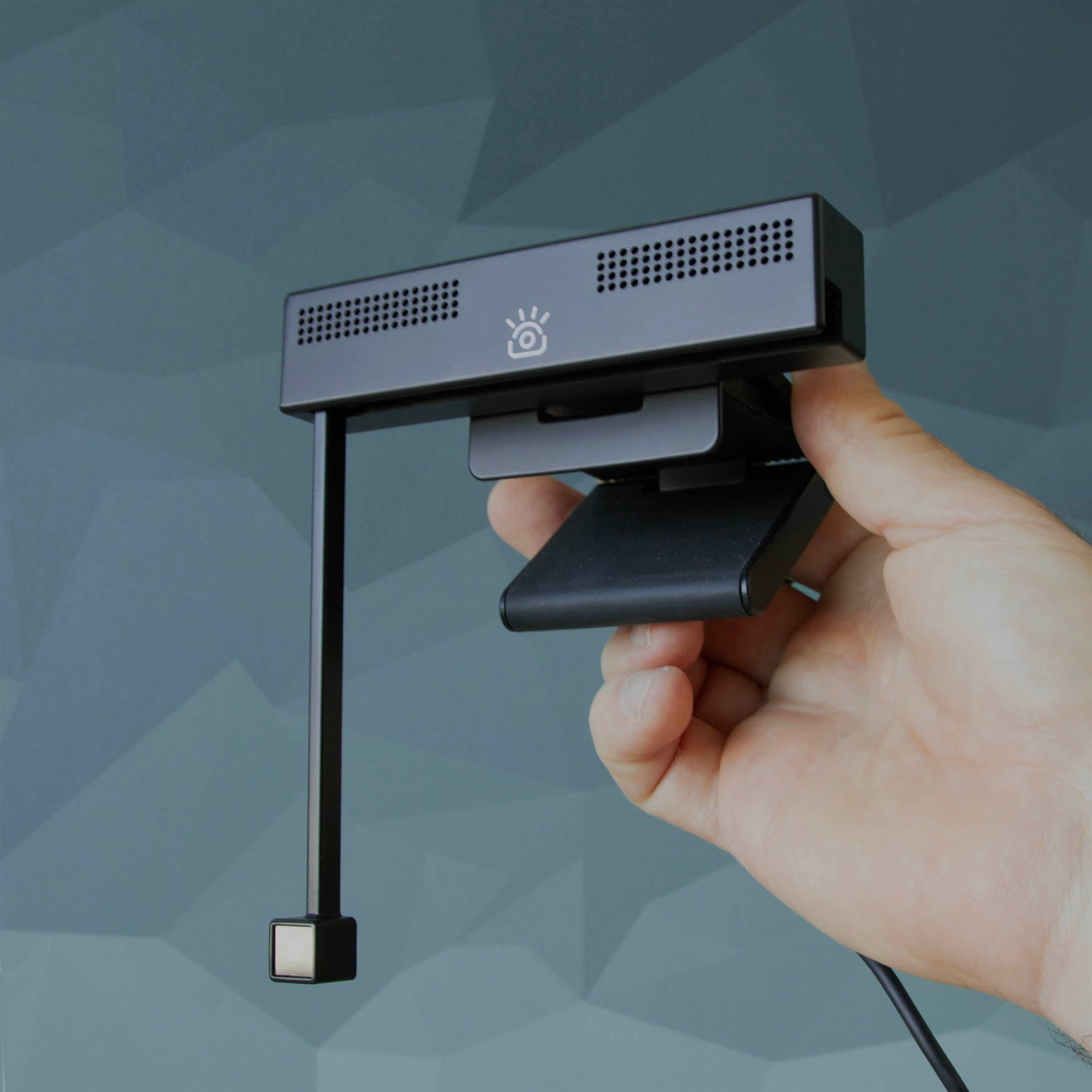
Place the lens as close as possible to the face of the person you are speaking with. That is the whole trick.

On a normal call
Position the camera around the other person's forehead. This gives natural eye contact while keeping their face unobstructed.
Move the window, not the camera
Rather than re-mounting the camera, drag the participant's video window up so it sits directly under the lens. You can also resize the window to bring their face closer to the camera. Most meeting apps let you detach or reposition it.
While screen sharing
Keep the camera near the person, not near the shared presentation or document — as shown on the right in the first image.
It feels counterintuitive, but it means your gaze returns naturally to the other person as you talk through the content, instead of appearing to stare off to the side.
On a large screen
The bigger the display, the more the window position matters — a participant tile in the far corner of a 34-inch monitor undoes the whole effect.
Two monitors
The only thing that changes with two monitors is where you put the camera.
Mount the camera on the monitor where the person you're speaking with appears. If you use one screen for the meeting and another for documents or shared content, keep the camera on the meeting screen.
When your layout changes, move the participant window instead of re-mounting the camera. Drag it so it sits just below the lens.